
Everyday risk as the starting point for protection conversations
Jul 28, 2026
You may be used to starting protection conversations with the big shocks. Serious illness. Death. Long term loss of income. Those risks still matter, but they are not usually what you or your clients feel first.
MetLife’s Everyday Risk Report paints a different picture of risk in the UK.
Everyday accidents and short-term illnesses are rising. Hospital admissions are up 7%, A&E attendances are up 3.8% , and 148.9 million working days were lost to sickness or injury in 2024.
Yet only a small minority of adults have any form of accident and sickness cover.
Many of the people you advise are one minor setback away from financial stress because they lack savings, employer support or basic cover. For you as an adviser, that creates both a responsibility and an opportunity.
The most engaging way into protection is often not the rare catastrophe, but the common disruption.
Everyday risk is straightforward to explain. It is the chance that an ordinary incident interrupts work, school or family life.
A fall at home that leads to a broken wrist. A child’s short hospital stay with a respiratory infection. A bout of flu that keeps someone off work for a week with reduced or no pay.
The Everyday Risk Report highlights that:
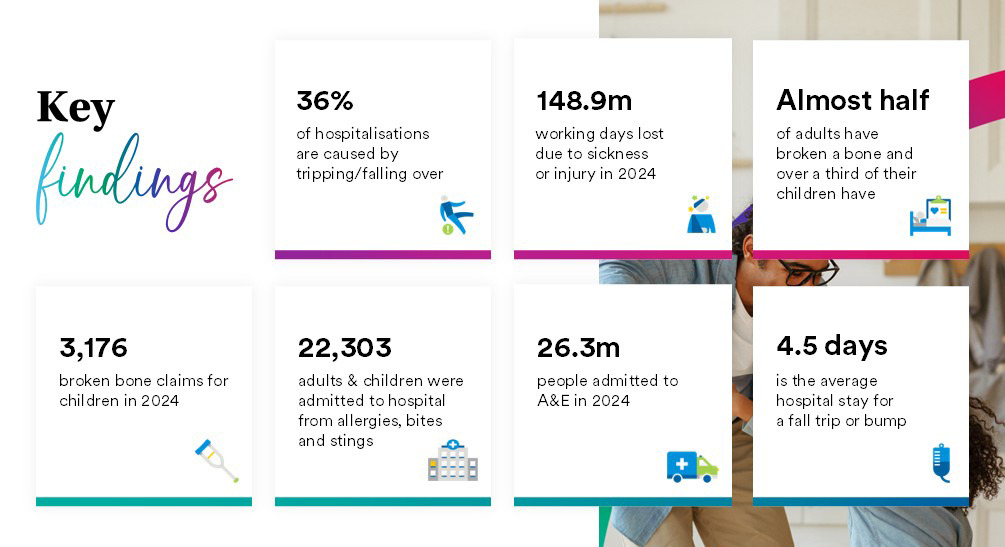
These are not extreme events. They are what happens every day. With many people facing financial pressures, even a few days in hospital or a short spell off work can create real pressure for your client.
Rent or mortgage payments still need to be made. Food, childcare and travel costs continue. Statutory Sick Pay is rarely enough to bridge the gap.
So when you frame risk in this way, you keep the conversation grounded in your client’s everyday experience. Most people can picture a broken bone or a sick child far more easily than a hypothetical life changing diagnosis decades away.
Both clients and advisers tend to default to headline risks. Clients arrive expecting to talk about life cover or critical illness as “serious” protection.
You may find yourself following that lead, especially when time is tight, or when your fact find is structured around major events.
There are several reasons everyday risk gets less attention.
The Everyday Risk Report challenges these assumptions with data. It shows that everyday incidents are frequent, disruptive and often expensive. It also highlights groups who are especially exposed.
The report identifies several groups whose finances are particularly vulnerable to everyday shocks.
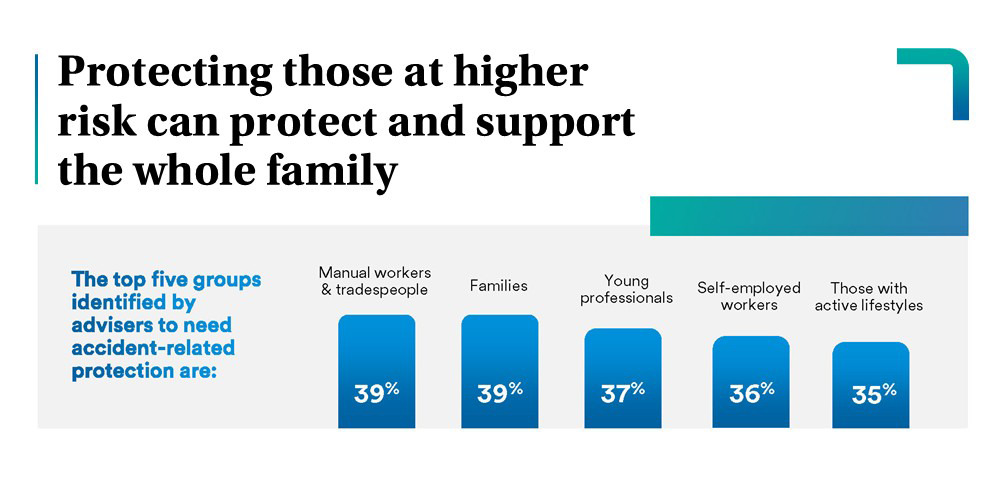
You probably work with at least one of these groups already. They are not necessarily the highest earners or the most complex cases, but they often have the least margin for error. A four day hospital stay for a fall, which the Everyday Risk Report shows is typical, can quickly turn into a missed rent payment or a credit card balance that never quite goes away.
When you start protection conversations with these realities, they feel more relevant. They also demonstrate clear Consumer Duty thinking. You are identifying foreseeable harms and exploring practical ways to reduce them.
The protection gap is often framed as a single number. More than half of UK adults have no protection cover.
The report suggests a more nuanced view. The issue is not just lack of cover. It is a mismatch between the risks people actually face and the solutions they hold.
MetLife talks about completing the “protection puzzle”. Traditional life cover, critical illness and income protection remain central pieces.
However, they tend to focus on large, less frequent events. Everyday risk products, which pay out for accidents, short hospital stays and specific injuries, can fill the missing space.
For you, this is less about product promotion and more about sequence. Everyday risk can be a natural first step that leads into broader planning.
Once a client sees how a small, regular premium can support them through common setbacks, they are often more open to discussing longer term protection.
Advisers who are successfully integrating everyday risk into their advice process tend to do three things consistently.
Finally, they ask simple, practical questions.
These questions move the conversation from abstract risk to tangible impact. They also create a natural bridge to discussing what level of protection feels appropriate.
Everyday risk can be introduced with short reframes that shift how clients think about protection.
Used consistently, these reframes help clients see protection as part of everyday financial planning rather than a separate, one off decision.
Firms who embrace everyday risk are seeing stronger engagement, higher conversion and better persistency. Clients feel that advisers understand their real lives, that they’re not just a number. They are more likely to take the first step when that step feels manageable and relevant.
The Everyday Risk Report gives you a credible, data-led way to have these conversations. It turns abstract concern into specific, evidenced discussion.
Combined with a clear protection puzzle story, it can help you build deeper relationships, broaden the scope of advice and grow your business in a way that is firmly aligned with good customer outcomes.