
Complete the protection puzzle by understanding where accident and illness products fit
Jul 27, 2026
When you talk about protection, you probably start with the big pieces. Life cover. Critical illness. Income protection. These are familiar, and you know how to build them into a plan.
But the Everyday Risk Report shows that, even with those in place, many of your clients are still exposed. Everyday accidents, short term illness and children’s injuries are putting pressure on household finances long before a traditional policy is likely to pay out.
It can help to frame the conversation as a protection puzzle. This gives you a simple way to show that no single product can cover every risk. Different pieces work together to build a more complete picture.
MetLife’s accident and illness products sit in that puzzle as a flexible, day one solution for everyday risks. It does not compete with core life or income protection. It complements them.
You may naturally think about the protection gap in terms of under insured death or serious illness. The Everyday Risk Report widens that lens. It shows how more accidents and sickness than ever are disrupting work, school and family life.
Key findings include:
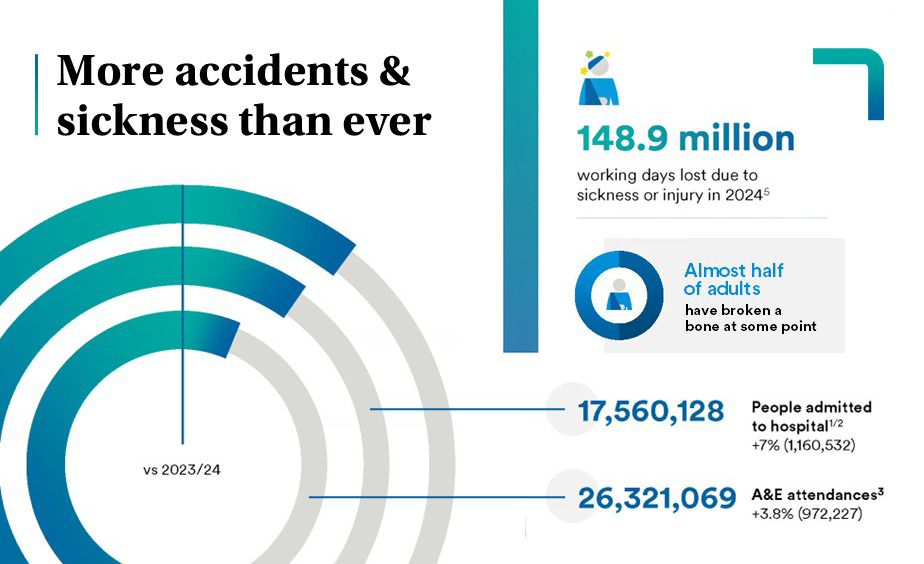
These are not rare, distant events. Falls, trips and bumps remain one of the most common causes of hospital admission, especially for children. In a real household, even a short stay in hospital or a broken bone can mean lost income, extra costs and real stress.
Traditional products are vital for long-term security. However, they often do not respond to these smaller, more frequent events. That is the gap in protection that accident and illness products are designed to fill.
The protection puzzle framework brings three priorities together:
Putting your customer first means understanding how everyday risk actually shows up in their life. You know that life is messy. Children fall at school. Clients get injured on the way to work. A routine operation turns into a few unexpected nights in hospital.
Consumer Duty then asks you to design solutions that are suitable, understood and deliver good outcomes. Commercial growth follows when your client can see that your advice has made a practical difference to their day-to-day resilience.
In this context, the puzzle pieces might look like:
Each piece has a clear role. For example, EverydayProtect MultiProtect aren't replacements for income protection or a large lump sum benefit. Instead, they offer simple, affordable cash payments that arrive quickly when everyday mishaps occur.
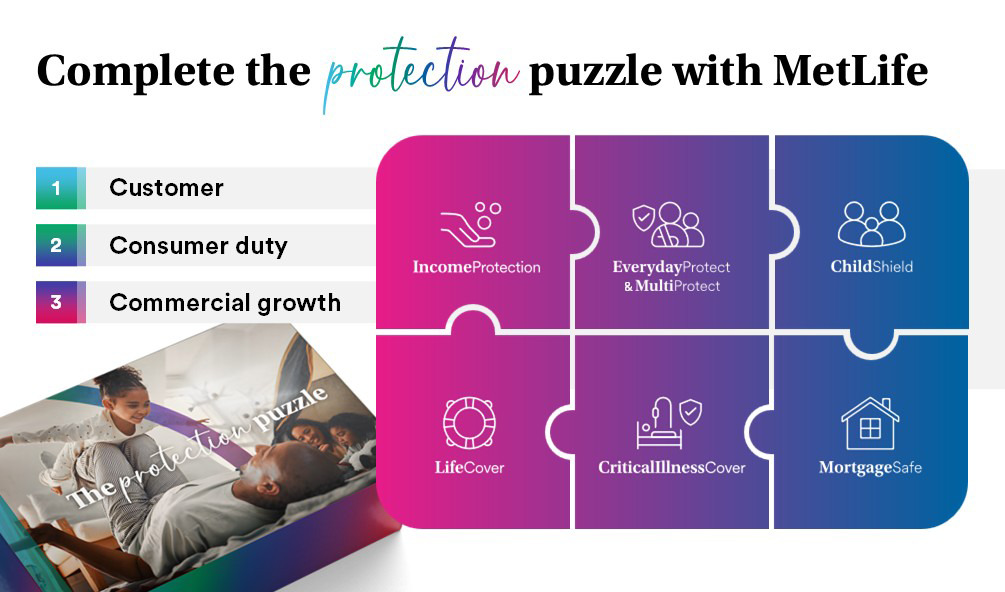
Accident and illness stands out in three main ways.
Most protection products are built around low frequency, high impact events such as death, cancer or a heart attack. EverydayProtect and MultiProtect focus on higher frequency, lower severity events that still carry financial consequences.
Covered scenarios include broken bones, dislocations, ligament tears, hospital stays and accidental death. Optional benefits can extend this to children and to clients with active lifestyles.
The Everyday Risk Report highlights that broken bones are one of the most common reasons parents claim for their children. EverydayProtect and MultiProtect are designed with this reality in mind. Benefits are structured around events that your clients recognise from their own lives, which makes conversations feel more relevant and less abstract.
EverydayProtect is non underwritten. Clients can usually be accepted without medical questions, which makes it particularly useful for:
Cover starts from day one, so your client has confidence that a new policy can respond to the very next accident or hospital stay. This contrasts with some traditional products that involve waiting periods, deferred periods or lengthy underwriting.
The protection puzzle positioning can change the way you frame discussions.
Instead of starting with “what cover would your family need in the event of your death”, you can begin with everyday realities:
These questions connect directly to the risks highlighted in the Everyday Risk Report . They also create a natural path into a layered solution, where EverydayProtect and MultiProtect sit alongside more traditional products.
You can then introduce accident and illness cover as a practical tool that:
Because benefits are easy to explain, your client can quickly see how the product would work in their own circumstances.
The protection puzzle is more than a useful metaphor. It supports Consumer Duty and commercial outcomes in several ways.
Additionally, they can:
No single product completes the protection puzzle. However, by combining life cover, critical illness, income protection, mortgage protection and accident and illness cover, you can help your client feel more confident in living their everyday life.
EverydayProtect and MultiProtect are differentiated through a focus on everyday events, day-one protection and modular design.
When you use it alongside insights from the Everyday Risk Report, you have a practical way to:
For your client, that means fewer gaps in protection. For you, it means a clearer story, stronger relationships and a more resilient advice proposition.