
Everyday Risk Report 2026
Use life moments as triggers
Making protection personal is key to successful client conversations.
By connecting protection to what matters most in a client’s life, you highlight the value of cover by making protection feel more timely and relevant.
Major life moments such as buying a home, starting a family or setting up a business increase financial commitments and dependence on income. Knowing there’s a financial safety net in place delivers considerable peace of mind.
Life events create a clear need for protection, but they do not always prompt action. MetLife’s YouGov research found that 55% of UK adults say it is not applicable because they have never considered taking out financial protection insurance.
The leading trigger among those listed was buying a home or taking out a mortgage, selected by 18%, followed by illness or injury in the household at 8%, having or adopting a child at 7%, and becoming self-employed or freelance at 4%.
These findings reveal a clear “trigger gap” as even moments that increase financial responsibility do not automatically lead people to review protection. By identifying these moments in your clients’ lives, you can make sure your conversations reflect their changing needs, leading to protection that feels more personal.

First time buyers and home ownership
Buying a home is one of the biggest financial commitments a client will ever make. And yet 3 million UK mortgage holders have no financial safety net in place.
Buying a home or taking out a mortgage is the life event most likely to prompt people to review or consider financial protection, but only 18% selected it in MetLife’s YouGov research. This suggests the mortgage moment is a clear opportunity for advisers, but not one that consumers will always act on without prompting.
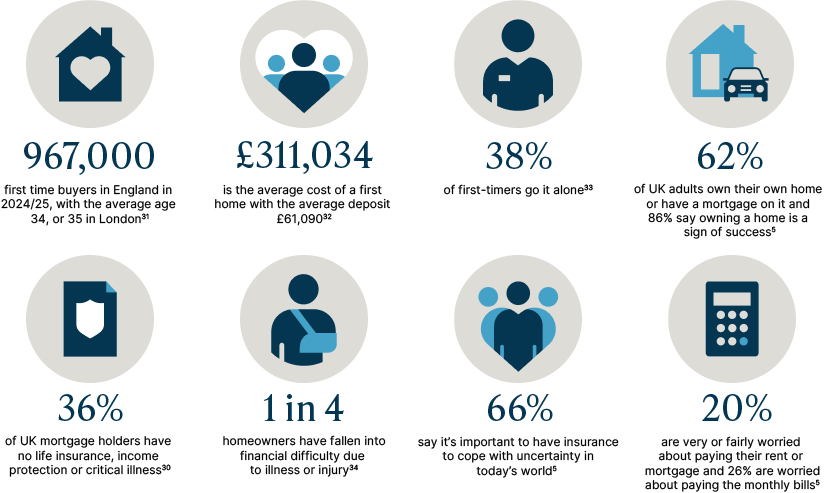
How to use these homebuying statistics to personalise protection conversations
Start by recognising the importance of the moment and building rapport
“Buying your home is a huge achievement, and one of the biggest financial commitments most people take on.”
Introduce the risk using simple questions and reinforce with data.
“The key question isn’t just whether the mortgage is affordable today, it’s how it would be maintained if your income changed. It’s not always big life events that prevent people from keeping up with their mortgage repayments. In fact, one in four homeowners experience financial difficulty due to illness or injury, and one in five have no savings to fall back on.”
Present protection as a practical safeguard, not an extra cost.
“Two thirds of people say it’s important to have insurance to cope with uncertainty. That’s where protection comes in, not as an add-on, but as a way to help ensure you can keep your home and maintain your commitments, even if something unexpected happens.”
Starting, or growing, a family
For many clients, having children marks the point at which protection becomes a family responsibility. This makes it one of the most important life stages to revisit financial resilience and protection needs.
Conversation opportunities:
- The cost of raising a child to age 18 is at £260,000 for a couple and £290,000 for a lone parent35
- Average weekly household expenditure increased to £676.60 in 2025, up £53.30 (9%) from the previous year36
- 80% of parents say protecting and prioritising family is extremely or very important5
- 40% of adults say saving for their child’s future is in their top three financial goals5
- Around 200,000 children in the UK break a bone each year37
- 21.1% of parents have taken time off work as planned annual leave or sick leave because of child illness or injury
- 14.7% experienced stress or anxiety about the financial impact of taking time off work
- 11.3% sent a child to school or childcare while still unwell because they could not afford to take more time off work
How to use these statistics on starting and growing a family to personalise protection conversations
Recognise the life milestone.
“Starting or growing a family is exciting, but it also means more people are relying on your income and financial security.”
Highlight the financial responsibility.
“With the cost of raising a child estimated at over £260,000 and household expenses continuing to rise, many families are more dependent than ever on regular income.”
Introduce protection as family security.
“Protection can help provide a financial safety net if illness or injury affects your ability to work, helping maintain stability while you focus on what matters most.”
Self-employed
For self-employed clients, the ability to earn an income is often directly linked to their ability to work. This can make them particularly vulnerable if they’re unable to work due to illness or injury.
MetLife’s YouGov research shows that 4% of UK adults say becoming self-employed or freelance has prompted them to review or consider financial protection insurance. The figure is modest, supporting the need to raise the topic proactively with self-employed clients rather than assume the risk is already front of mind.
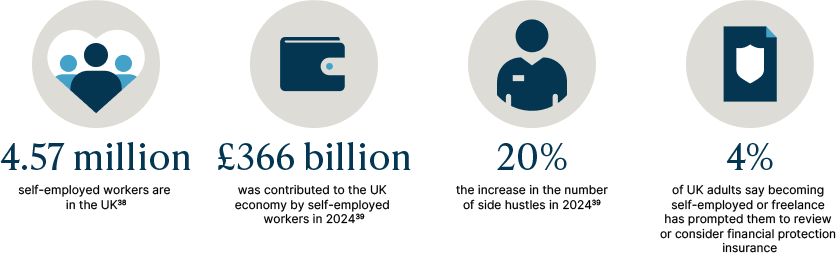
How to use these self-employed statistics to personalise protection conversations
Understand their income dependency.
“As you’re self-employed and therefore not eligible for Statutory Sick Pay, how would your finances be affected if you couldn’t work for a period of time?”
Highlight the reality of everyday risk.
“Many workplace absences aren’t caused by major accidents, they’re caused by common issues like strains, injuries and musculoskeletal conditions that can affect anyone.”
Position protection as a safety net.
“Protection can help provide financial support while you recover, giving you greater peace of mind if illness or injury affects your ability to earn an income. It can also come with value-added services to support a smoother, faster recovery.”
Healthy and active lifestyles
It might not warrant the same celebrations as a first home or a new baby, but leading a healthy and active lifestyle is definitely a trigger for a protection conversation. Being active has all sorts of long-term health benefits but it can also increase the risk of injury with novices and those doing large amounts of activity at highest risk.
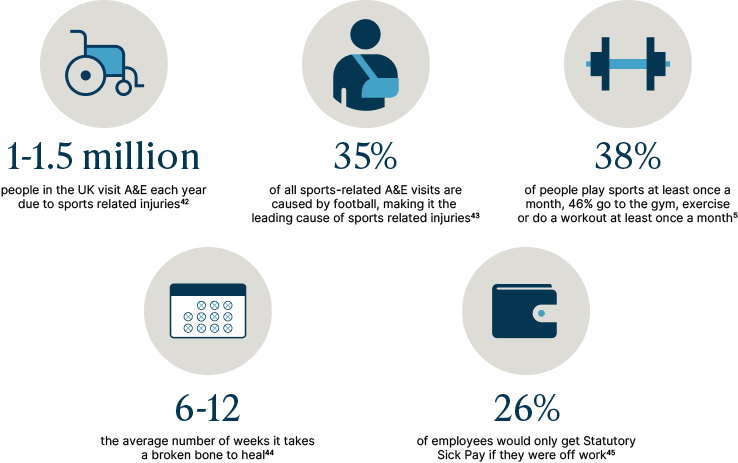
How to use these active lifestyle statistics to personalise protection conversations
Start by positively recognising the client’s lifestyle to build rapport.
“It’s fantastic that you enjoy an active lifestyle. Have you always enjoyed playing football / cycling / running? When’s your next match/run?”
Gently introduce the reality that being active can increase exposure to injury, supported by stats.
“It does also mean there’s a slightly higher chance of injury, for example, around 1.5 million people end up in A&E each year due to sports-related injuries, and things like football account for around a third of those. Even a fairly common injury like a broken bone can take 6 to 12 weeks to recover.”
Link the risk to income impact and introduce accident & sickness cover as the solution.
“If something like that stopped you working for a few weeks, it can affect your income, especially if you’re not eligible for sick pay. That’s where accident and sickness cover can help, by giving you a financial buffer while you recover.”
Better conversations start when they reflect the life your client is building. Whether that’s a first child, buying a home or running a marathon, connecting cover to what matters to your clients highlights the value and helps make your protection conversations more personal.